Maybe your denture slips when you laugh. Maybe you’re about to lose the teeth you have left. Either way, you’ve decided dental implants are the way forward. Then comes the next question: should your new teeth be fixed in place with All-on-4, or should you choose snap-in dentures that click onto implants but still come out?
Both options use dental implants, and both hold far better than a traditional denture resting on the gums. The difference is in how the teeth attach, how they feel when you eat, and what daily life looks like afterward. This guide compares them side by side so you can walk into your consultation knowing what to ask. If you’re also considering a regular denture, read our guide to All-on-4 or traditional dentures.
All-on-4 vs Snap-In Dentures at a Glance
| All-on-4 Implants | Snap-In Dentures | |
| Cost | Call for pricing. Higher upfront investment, because the implants support a fixed bridge. | Call for pricing. Usually a lower upfront investment, with small attachment parts replaced over time. |
| Treatment Time | Implants are placed in one surgery, often on the same day as any extractions. In many cases you leave with fixed temporary teeth that day. Final teeth follow after a few months of healing. | Implants are placed in one surgery. After a few months of healing, the attachments are fitted and the denture snaps into place. You wear a denture while you heal. |
| Lifespan | Implants can last for decades with good care. The bridge may need repair or replacement after many years. | Implants can last for decades with good care. The nylon inserts wear and are replaced regularly, and the denture needs relining and eventual replacement. |
| Pain / Recovery | Minor oral surgery. Expect soreness and swelling for a few days, then a soft diet while the implants heal. | Minor oral surgery, often with fewer implants. Expect soreness for a few days and a short adjustment period once the denture is fitted. |
| Best Candidate | Missing or losing most teeth in an arch, wants teeth that never come out, and is healthy enough for implant surgery. | Wants a big step up from a loose denture, doesn’t mind removing teeth to clean them, or prefers a lower upfront investment. |
What Are All-on-4 Implants?

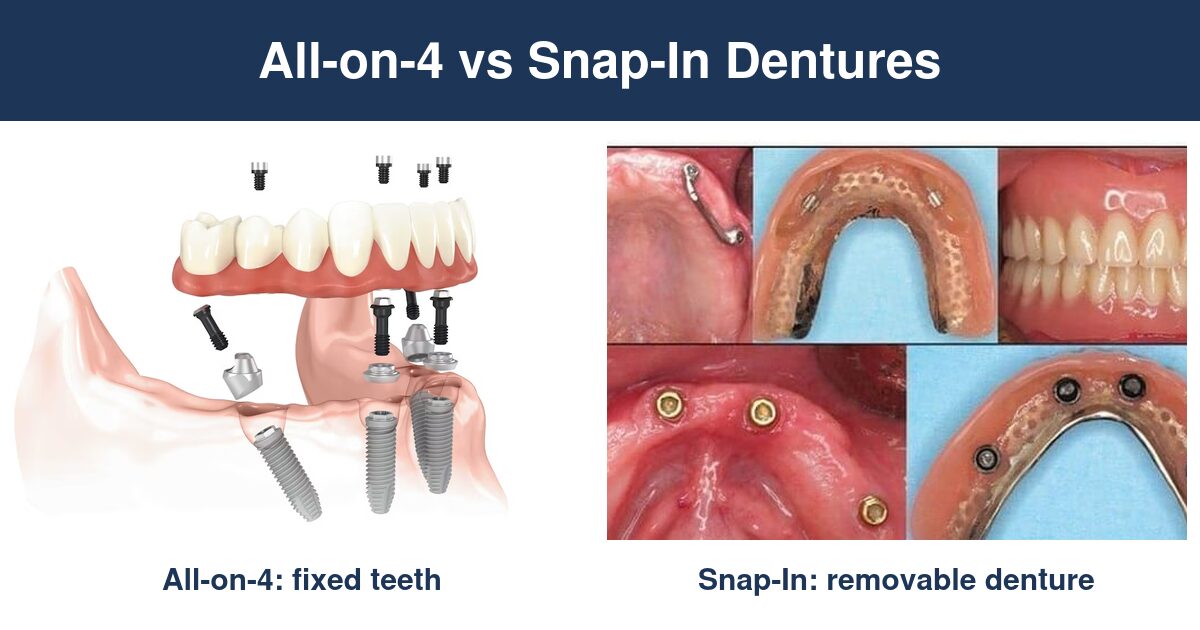
All-on-4® replaces a full arch of teeth using four dental implants. The two front implants are placed straight. The two back implants are angled to use as much of your existing bone as possible, which is why many patients with some bone loss can skip bone grafting. A full bridge of teeth is then secured to the implants.
The teeth are fixed. You don’t take them out at night, and you never need adhesive. Only your dentist can remove the bridge, usually during maintenance visits. Learn more on our All-on-4 dental implants page.
What Are Snap-In Dentures?
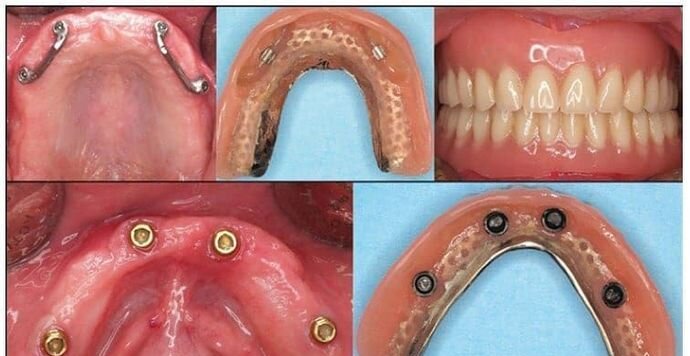
Snap-in dentures, also called snap-on dentures or implant-supported overdentures, are removable dentures that click onto dental implants. Small attachments sit on top of the implants, and matching housings inside the denture lock onto them. Some designs use a thin metal bar that connects the implants instead.
The lower jaw can often be stabilized with as few as two implants. The upper jaw usually needs more, because an upper denture has to resist gravity. You snap the denture out every day to clean it and usually leave it out overnight. Our dentures page covers the full, partial and implant-supported dentures we make.
Key Differences
Fixed vs. Removable
This is the biggest difference. All-on-4 teeth stay in your mouth day and night, just like natural teeth. Snap-in dentures stay put while you eat and talk, then come out for cleaning. Some patients like being able to take their teeth out. Others want to forget they’re wearing a prosthesis at all.
Chewing and Stability
Both are a major upgrade from a traditional denture. Snap-in dentures can still move slightly on their attachments with tough or sticky foods, because part of your bite still rests on your gums. An All-on-4 bridge is anchored firmly to the implants. Once you’ve healed, biting into an apple or chewing steak feels much closer to natural teeth.
Comfort and the Roof of Your Mouth
A traditional upper denture covers your palate to stay in place, which can dull your sense of taste and of hot and cold. An All-on-4 bridge leaves the palate open. An upper snap-in denture can sometimes be made in a horseshoe shape that leaves the palate uncovered, but this usually takes more implants. If an open palate matters to you, tell your dentist at the consultation.
Daily Care
All-on-4: Brush the bridge like natural teeth, and clean underneath it every day with a water flosser or special floss. Keep up with regular professional cleanings.
Snap-in dentures: Take the denture out, brush it and its attachments, clean gently around the implant posts, and store it overnight as your dentist recommends.
Maintenance Over the Years
Snap-in dentures have small nylon inserts that wear a little with every click. When the denture starts to feel looser, the fix is usually quick: new inserts at a routine visit, often every year or two. The denture base also needs relining as your gums change, and the denture itself will eventually need replacing.
All-on-4 bridges need regular professional cleanings, and your dentist may remove the bridge from time to time to check the implants. Over many years, the teeth on the bridge can wear or chip and may need repair or replacement.
Treatment Timeline
All-on-4 is often a “teeth in a day” treatment. Failing teeth are removed, the implants are placed, and a fixed temporary bridge is attached in the same visit. Your final bridge is made once the implants have fused with the bone. Learn more about same-day dental implants.
Snap-in dentures usually follow a staged path. The implants are placed, they heal for a few months while you wear a denture, and then the attachments are fitted and the denture snaps into place.
Which Option Fits You?
All-on-4 may be the better choice if you:
- Want teeth that never come out and never move
- Are missing or losing most of your teeth in the upper or lower arch
- Love foods like steak, apples or crusty bread
- Want an open palate on your upper teeth
- Are ready for a higher upfront investment in exchange for less daily handling
Snap-in dentures may be the better choice if you:
- Already wear a denture and mainly want it to stop slipping
- Prefer being able to take your teeth out to clean them
- Want a lower upfront investment
- Have been advised that fewer implants suit your bone or health
Your jawbone, gum health and medical history decide what’s possible. A 3D scan at your consultation shows how much bone you have and where implants can go. Both options are part of our restorative dentistry care.
Can You Start With Snap-In Dentures and Upgrade Later?
Sometimes. Depending on how many implants you have and where they are placed, your dentist may be able to add implants later and switch you to a fixed bridge. This isn’t always possible with a two-implant design. If you think you might want fixed teeth one day, say so before treatment starts so your plan can allow for it.
Frequently Asked Questions
Are snap-in dentures the same as All-on-4?
No. Both attach to dental implants, but All-on-4 is a fixed bridge that only your dentist can remove. Snap-in dentures click onto implants and come out every day for cleaning.
Which is more stable, All-on-4 or snap-in dentures?
All-on-4 is more stable because the bridge is fixed firmly to the implants. Snap-in dentures are far more secure than traditional dentures but can move slightly with tough or sticky foods.
How many implants do snap-in dentures need?
It depends on your jaw. A lower snap-in denture can often be held with as few as two implants. An upper denture usually needs more. Your dentist will recommend a number after a 3D scan.
Do I take All-on-4 teeth out at night?
No. All-on-4 teeth stay in day and night. Snap-in dentures are usually removed at night and cleaned daily.
How long do All-on-4 and snap-in dentures last?
With good care, the implants for both can last for decades. Snap-in dentures need new nylon inserts regularly and relines over time. An All-on-4 bridge may need repair or replacement after many years.
Can I switch from snap-in dentures to All-on-4 later?
Sometimes. It depends on the number and position of your implants and your bone. Additional implants may be needed. Mention it before treatment if a fixed option may interest you later.
Find Your Best Option
Not sure which is right for you? Schedule a consultation at your nearest NÜVA Smile location.