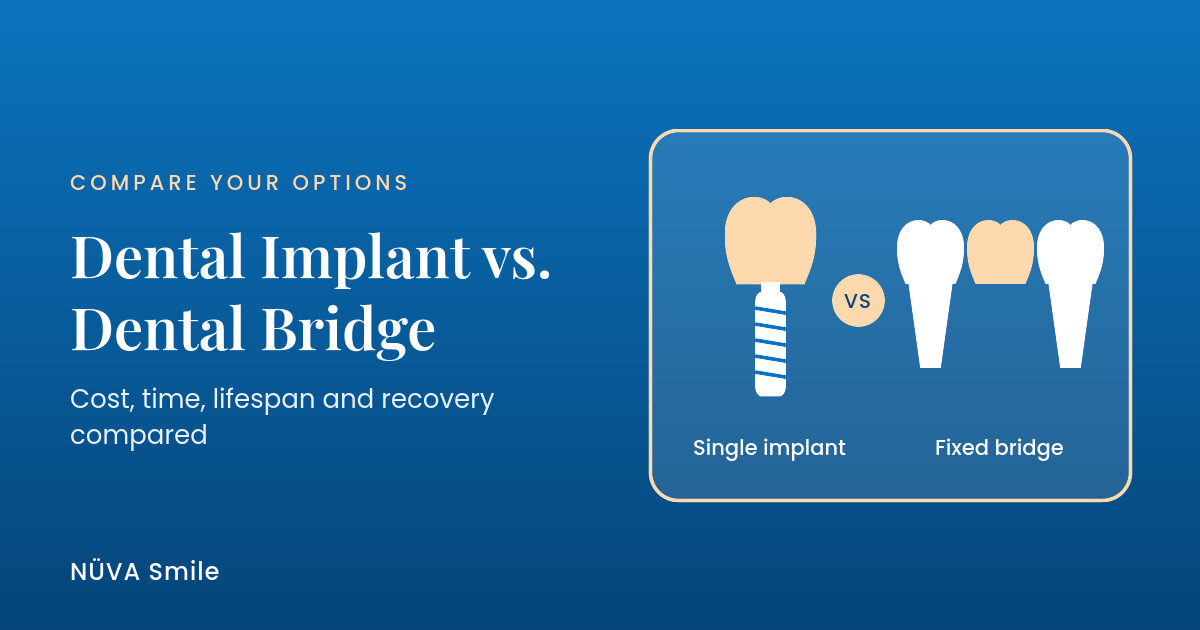
If your dentures keep rubbing and leaving painful gum sores, you are not alone, and you do not have to put up with it. Plastic (acrylic) dentures sit directly on your gums, so even a small fit problem can turn into a sore spot within days. The good news is that most denture sores have a simple cause and a simple fix. This guide explains why dentures rub, what you can do today, when a sore needs a dentist, and how NÜVA Smile treats the problem for good.
Why Do Dentures Rub and Cause Gum Sores?
Dentures rest on soft gum tissue, and anything that puts uneven pressure on that tissue can cause a sore. The most common reasons are:
- Your gums and jawbone change shape over time. A denture that fit well at first can slowly stop matching your mouth, so it shifts and rubs.
- New dentures need adjusting. A new set often has a tight spot or rough edge that only shows up after a few days of wear.
- A loose denture that moves. Every time it slides while you chew or talk, it rubs the same area.
- Trapped food under the denture. A small particle acts like a pebble against the gum.
- No rest or poor cleaning. Wearing dentures around the clock, or not cleaning them well, can lead to red, inflamed gums known as denture stomatitis.
What Do Denture Sores Look and Feel Like?
A denture sore usually shows up as a red, tender spot, a raw or blistered patch, or a small ulcer where the denture presses. Some sores look white. They often hurt most when you chew or when you put your dentures in or take them out. Gums that feel sore along the whole ridge usually point to a general fit problem rather than one tight spot.
What Can You Do at Home Until Your Appointment?
These steps help a sore calm down, but they do not fix the cause:
- Take your dentures out for several hours a day, including overnight, to let your gums rest, unless your dentist has told you otherwise.
- Rinse with warm salt water (half a teaspoon of salt in a cup of warm water) a few times a day.
- Clean your dentures daily and rinse them after meals so food does not get trapped.
- Choose softer foods and cut them into small pieces while the sore heals.
- Do not file, trim or glue your dentures yourself. DIY repairs can warp the fit and irritate your gums even more.
Denture adhesive does not fix a poor fit, so it is not a cure for rubbing.
When Should You See a Dentist?
Book a visit soon if you notice any of the following:
- A sore that has not started to heal after about two weeks
- A sore that keeps coming back in the same spot
- Swelling, bleeding, fever or pus
- White or red patches that do not go away
- Pain that stops you from eating, or dentures that feel loose
Any mouth sore that lasts more than two weeks should be checked, even if you are sure the denture is the cause.
How a Dentist Fixes Denture Sore Spots
The right fix depends on what is causing the rubbing. In many cases, a quick adjustment visit is all it takes to solve a sore spot, so there is no reason to push through the pain.
- Adjustment: your dentist finds the pressure point and smooths or reshapes the denture where it presses.
- Reline: a reline adjusts the fitting surface so the denture fits snugly again as your gums and jaw change. It is a routine part of denture care, not a sign that anything is wrong.
- Repair or remake: if a denture is cracked, worn or too far out of shape, a repair or a new custom-made set may fit better.
- Healing check: your dentist looks at the sore itself and makes sure it is healing.
You can read more about relines, repairs and fit on our Dentures page. If you recently received a new or same-day set, a few adjustments and a later reline are normal, as explained in our guide to same-day dentures.
When Dentures Keep Rubbing: A Longer-Term Option
If you have needed adjustment after adjustment, you may want a more stable solution. Implant-supported dentures and All-on-4 dental implants use implants in the jawbone to hold a full arch of teeth firmly in place, so the teeth do not slide and rub like removable plastic dentures. With All-on-4, a temporary set of teeth can often be attached on the same day.
Not everyone is a candidate, and some patients need bone grafting first, so an exam is the best way to find out. To compare the two options side by side, read All-on-4 or Traditional Dentures: Which Is Right for You? or browse our restorative dentistry services.
Frequently Asked Questions
Is it normal for new dentures to hurt your gums?
Some soreness in the first days is common while your mouth adjusts, and new dentures often need a few small adjustments. Pain that continues, or a spot that keeps getting worse, should be checked rather than tolerated.
How long do denture sores take to heal?
Many minor sores begin to settle within a few days once the pressure is removed, but healing depends on the cause. A sore that has not improved after about two weeks needs a dentist’s exam.
Can I wear my dentures when I have a sore spot?
It is best to rest your gums by taking your dentures out when you can, especially at night. Wearing a rubbing denture over a sore keeps the irritation going, so book a quick adjustment instead of waiting it out.
Will a reline fix gum sores from dentures?
Often it can. A reline adjusts the fitting surface so the denture sits more snugly, which helps when rubbing comes from changes in your gums or jaw. Your dentist will confirm whether a reline, an adjustment or a new denture is the right fix.
Do dental implants stop dentures from rubbing?
Implant-supported options such as All-on-4 hold a full arch of teeth firmly in place, so they do not slide like removable dentures. A consultation will show whether you are a candidate.
Tired of sore gums from dentures? Schedule a consultation at your nearest NÜVA Smile location.